Germany’s waste sorting system is one of the strictest in the world. Incorrect sorting can lead to warnings, fines, or complaints from landlords.
This guide explains the seven most common waste categories you will encounter as a student or new resident—and how to sort them correctly in daily life.
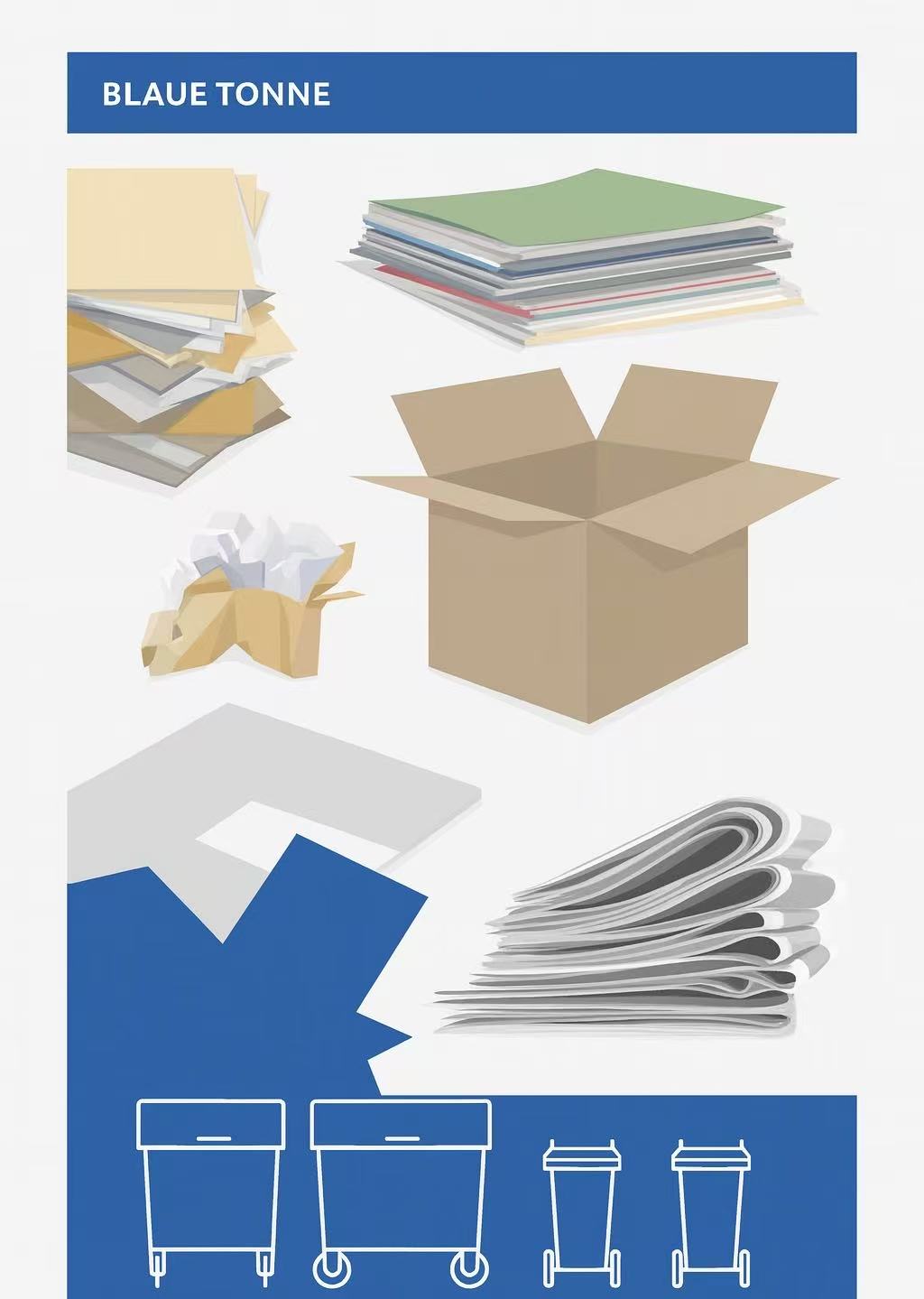
Paper Waste (Blue Bin / Blue Container)
What goes here:
• Newspapers, magazines
• Cardboard boxes (flattened)
• Paper packaging
• Clean paper bags
• Office paper, notebooks (without plastic covers)
Important rules:
• Paper must be clean and dry
• Remove plastic tape, bubble wrap, or plastic windows
• Flatten boxes to save space
Common mistakes:
• Pizza boxes with grease → ❌ not paper
• Paper cups with plastic coating → ❌
• Envelopes with plastic windows → remove window if possible
This bin is often shared in apartment buildings and fills up quickly if boxes are not flattened.
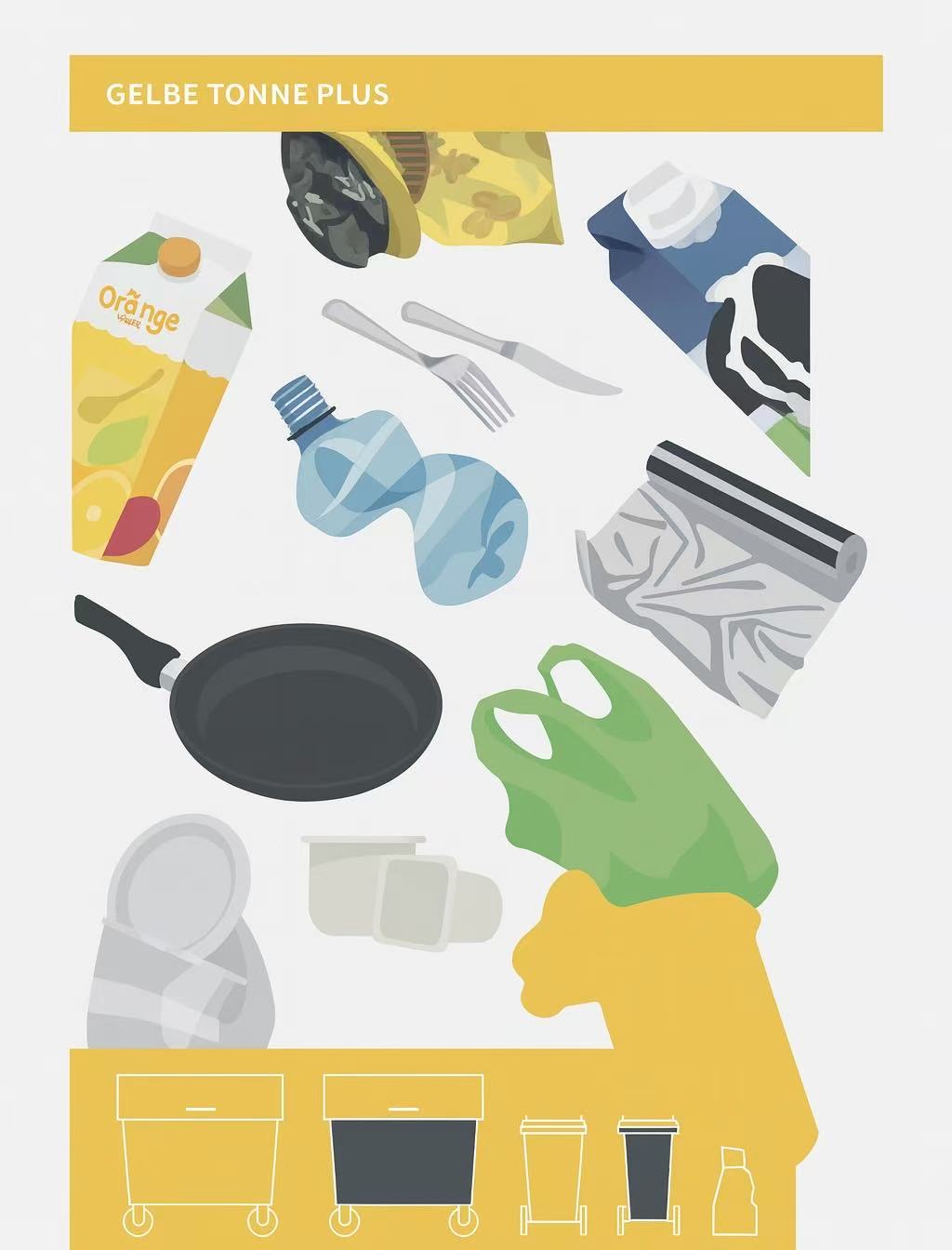
Packaging Waste (Yellow Bag / Yellow Bin)
What goes here:
• Plastic packaging
• Metal cans
• Aluminum foil
• Yogurt cups, food trays
• Plastic bottles (without deposit)
• Tetra Pak cartons
Important rules:
• Only packaging, not plastic objects
• Empty is enough — washing is not required
• Lids can stay on bottles
Common mistakes:
• Toys, plastic hangers → ❌
• Electrical items → ❌
• Plastic toothbrushes → ❌
If you are unsure, remember:
→If it once wrapped a product, it likely belongs here.
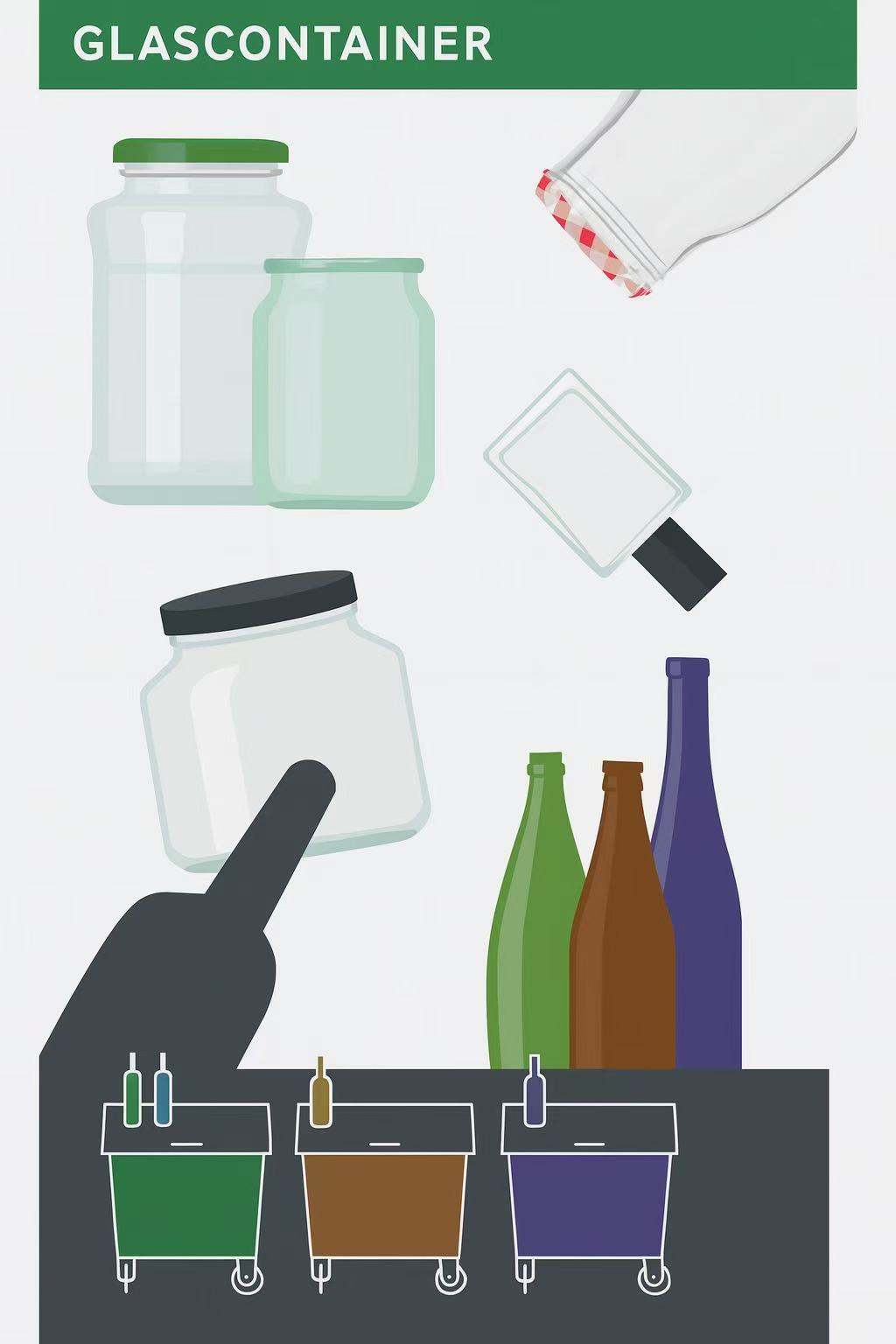
Glass Waste (Glass Containers)
Glass must be sorted by color:
• White glass (Weißglas)
• Brown glass (Braunglas)
• Green glass (Grünglas)
What goes here:
• Glass jars
• Glass bottles without deposit
What does NOT go here:
• Drinking glasses
• Mirrors
• Window glass
• Ceramics or porcelain
Important rules:
• Remove lids (put lids in yellow bin)
• Respect quiet hours — usually no glass disposal at night or on Sundays
If you are unsure about the color, always choose green glass.
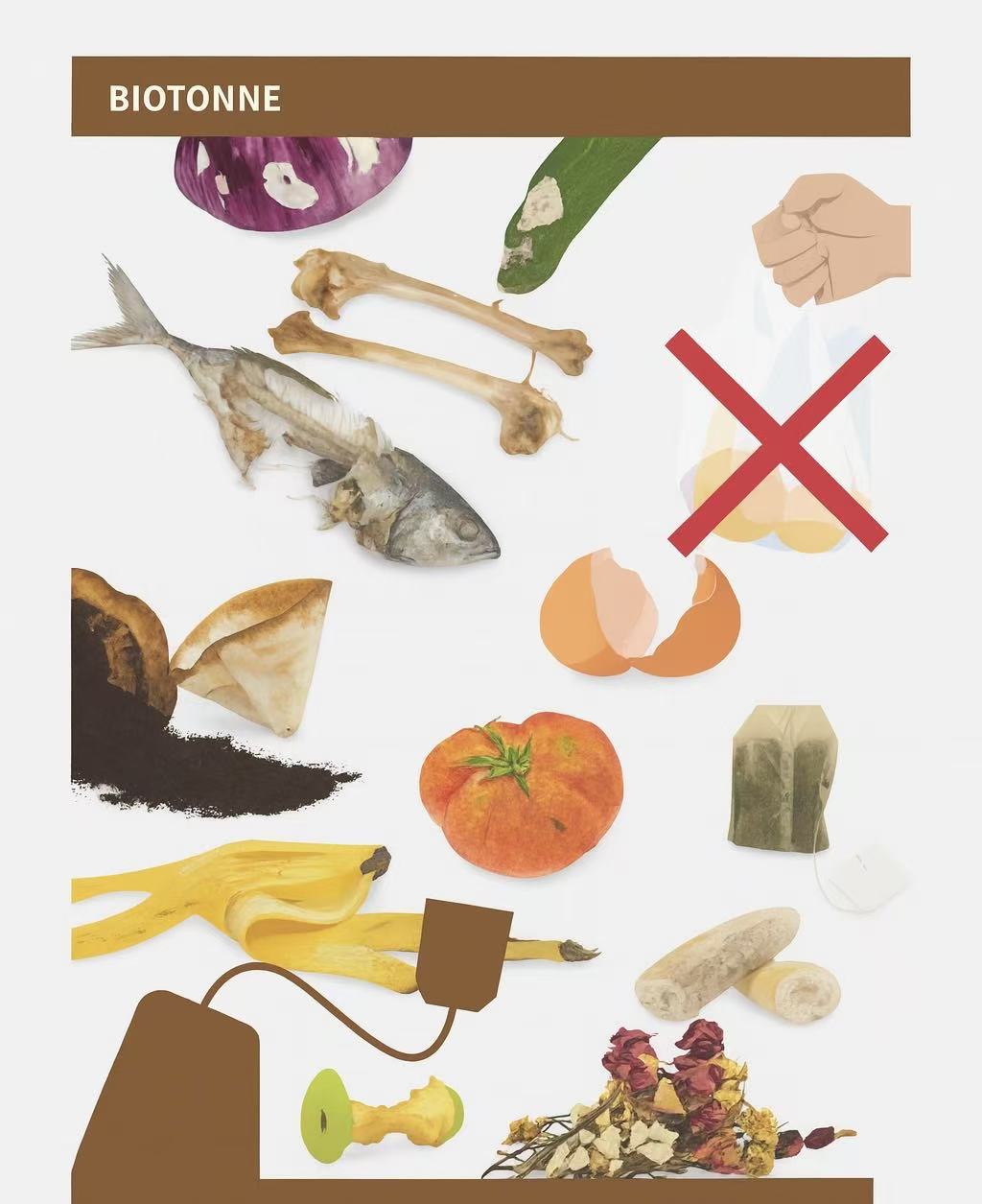
Organic Waste (Bio Bin)
What goes here:
• Food scraps
• Fruit and vegetable peels
• Coffee grounds and filters
• Tea bags
• Eggshells
• Small garden waste
What does NOT go here:
• Plastic bags (even “biodegradable” ones, unless explicitly allowed)
• Meat bones (depends on city)
• Cooked food with lots of oil
Common student mistake:
Using plastic trash bags inside the bio bin — many cities strictly forbid this.
Some cities require paper bio bags only.
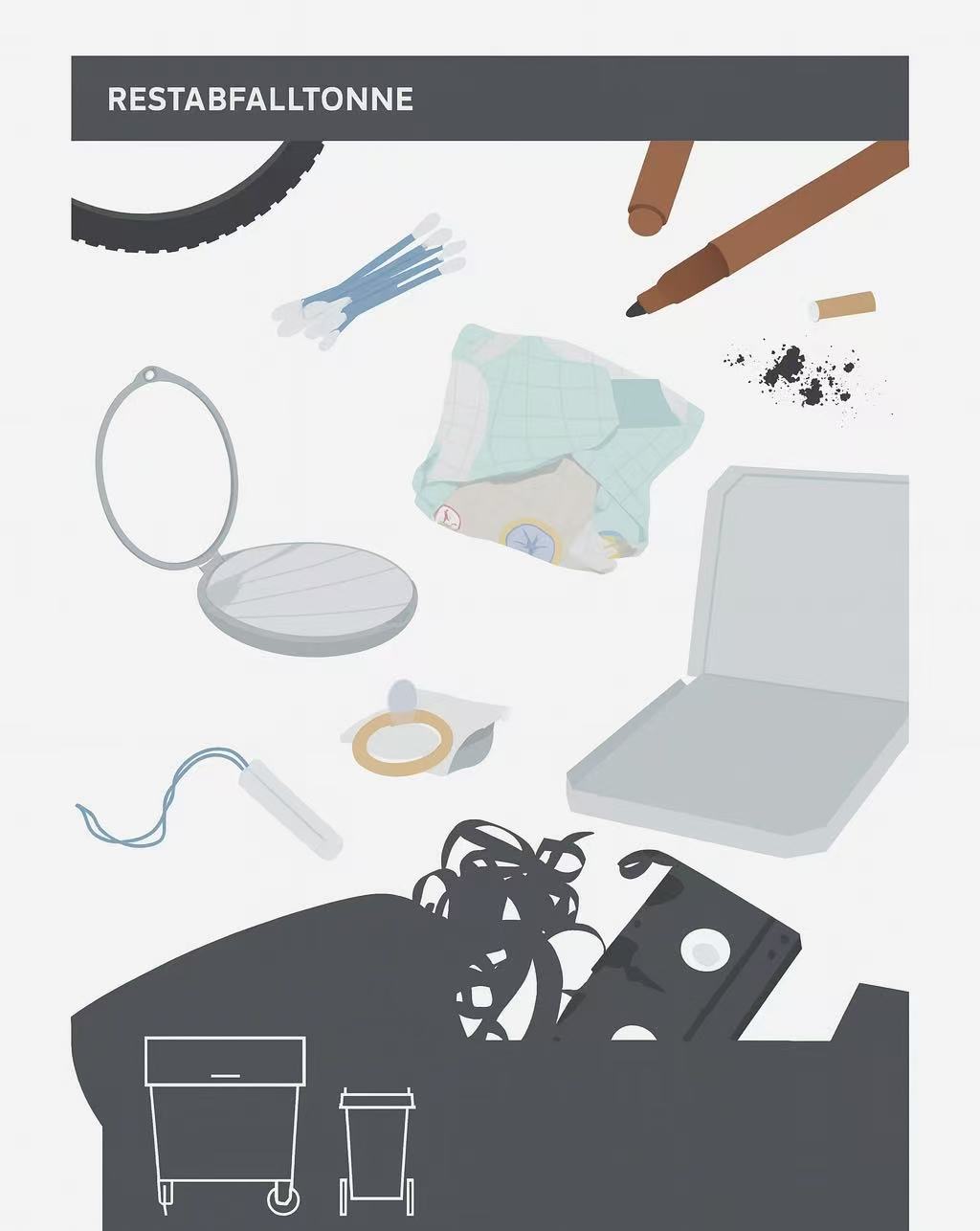
Residual Waste (Restmüll)
This is the last option, for items that do not belong anywhere else.
What goes here:
• Used tissues
• Diapers
• Broken household items
• Vacuum cleaner dust
• Ashes (cold)
Important rule:
If you put recyclable items here, landlords may complain or fine the household.
Restmüll bins are usually the smallest and most expensive, so use them carefully.
Deposit Bottles (Pfand System)
Many bottles and cans in Germany have a deposit (Pfand).
How it works:
• You pay extra (usually €0.25) when buying
• Return bottles to supermarket machines
• Get a receipt to redeem at checkout
Common items with deposit:
• Plastic drink bottles
• Beer bottles
• Soda cans
Important:
Do NOT throw Pfand bottles into glass or yellow bins — you lose money.
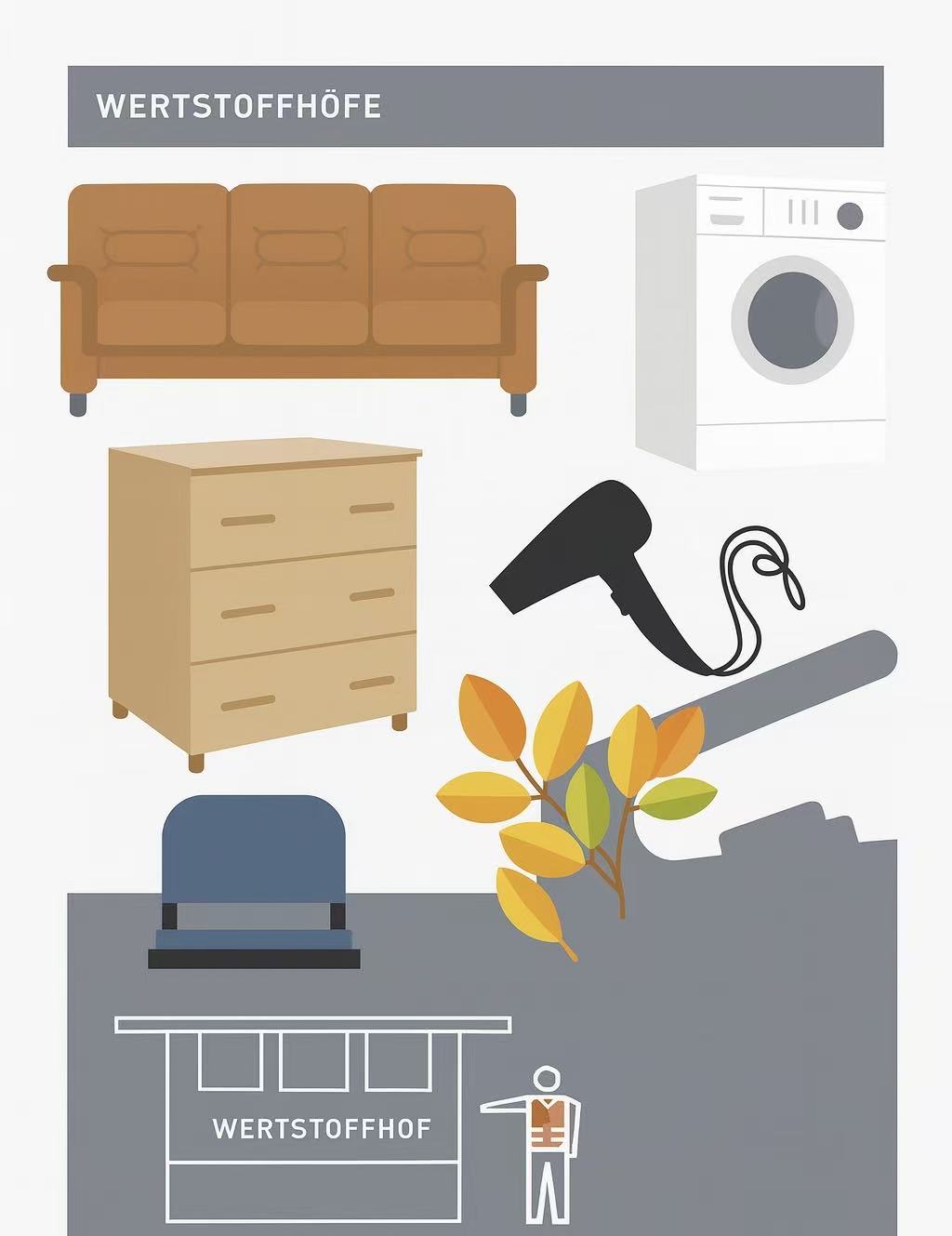
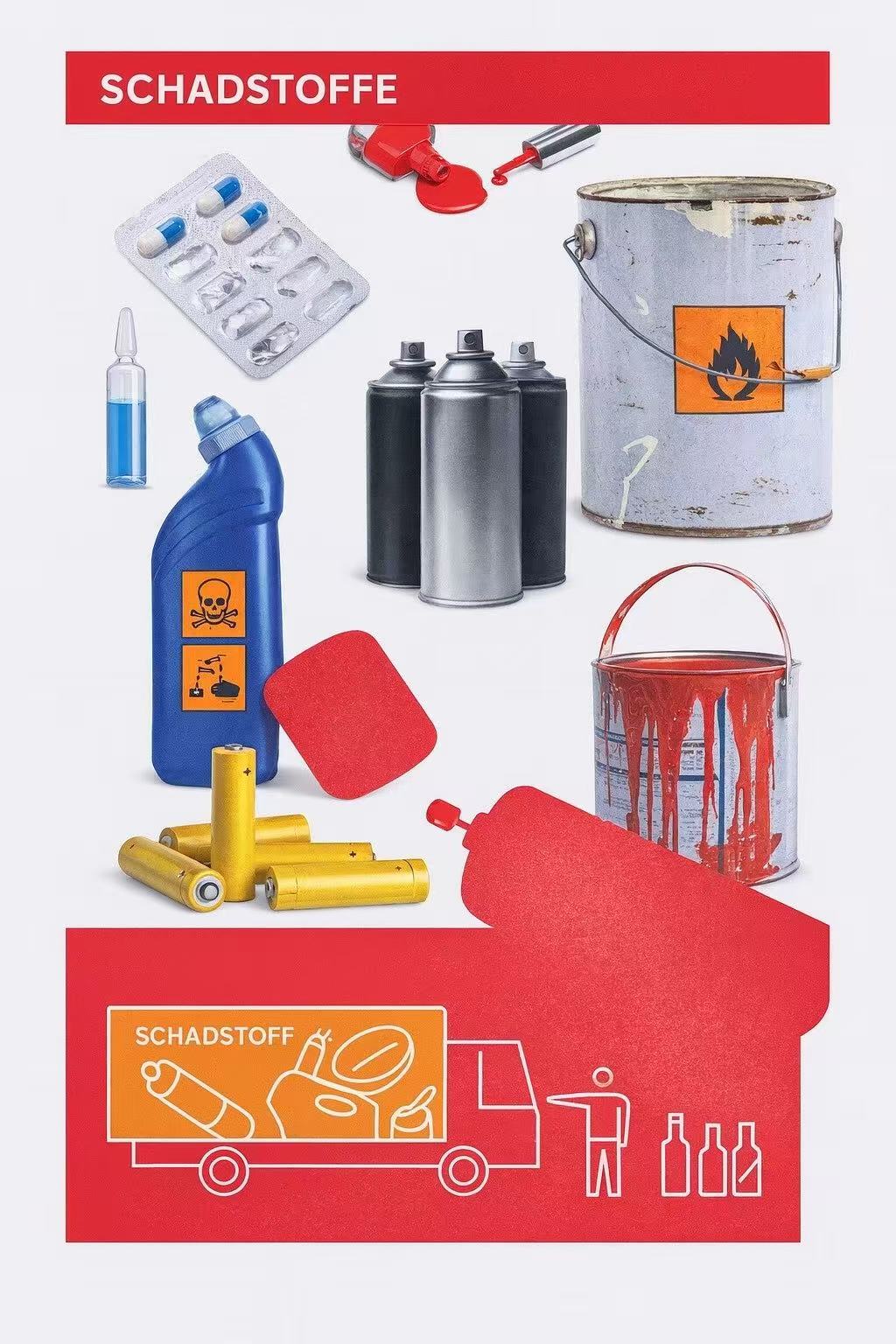
Special Waste & Bulky Items (Sondermüll & Sperrmüll)
Includes:
• Batteries
• Electronics
• Paint, chemicals
• Old furniture
• Large appliances
These must NOT be thrown into regular bins.
How to dispose:
• Recycling centers (Wertstoffhof)
• City collection days
• Special drop-off points in supermarkets (for batteries)
Always check your city’s official website for instructions.
Final Tips for Students
• Waste rules vary slightly by city and state
• When in doubt, ask your landlord or check the city website
• Incorrect sorting can affect your deposit when moving out
• Germans take waste separation seriously — neighbors may notice
Understanding these seven categories will already cover 95% of daily waste situations in Germany.